


What Is OCD? Symptoms, Causes, and Treatment Explained
Obsessive-Compulsive Disorder (OCD) is a complex mental health condition that affects about 1.2% of U.S. adults in a given year, and about 2.3% over a lifetime.[1] I specialize in treating OCD, and one of the things I hear most often in a first session is, “I’ve been dealing with this for years, and I didn’t know it had a name.” If that sounds familiar, you’re in good company.
Many people also carry misconceptions about what OCD really is. It’s much more than being organized or particular.[2] If you’re wondering whether you or someone you care about might be experiencing OCD, this guide will walk you through what it is, how it shows up, and the effective treatments available.
key takeaways
- ✓OCD involves obsessions, compulsions, or both.
- ✓It is common, and it is not a character flaw.
- ✓ERP is the main evidence-based treatment.
- ✓Earlier support tends to help.
What is Obsessive-Compulsive Disorder?
OCD involves obsessions, compulsions, or both.[3] Most people experience the two together. It goes far beyond the occasional unwanted thoughts or repetitive behaviors that most people experience from time to time.
Obsessions are recurrent, intrusive, and unwanted thoughts, images, or urges that cause significant anxiety or distress. These aren’t simply excessive worries about real-life problems. They are deeply distressing precisely because they conflict with a person’s values and sense of self.
Compulsions are repetitive behaviors or mental acts that a person feels driven to perform in response to an obsession. They’re done to prevent a feared outcome or reduce anxiety. However, compulsions either aren’t realistically connected to what they’re designed to prevent or are clearly excessive.
What makes OCD so challenging is the cycle these two create, which is difficult to break without proper treatment. Many people recognize that their thoughts or behaviors aren’t rational, yet still feel unable to stop. I often tell clients that if it were as simple as deciding to stop, they would have done so long ago.
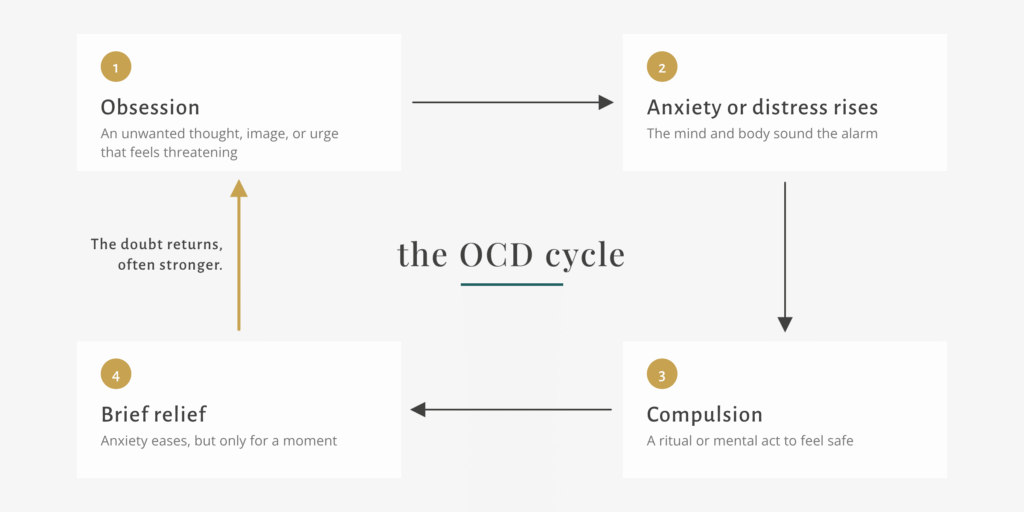
Compulsions bring brief relief, which is why the cycle keeps going.
What Are the Symptoms of OCD?
OCD can show up in many different ways, but I see certain themes again and again.[4]
Common Obsessions Include:
- Fear of contamination: Persistent worries about germs, dirt, or becoming ill from touching objects that others have touched
- Fear of harm: Concerns about accidentally causing harm to oneself or others, even without evidence that this would happen
- Need for symmetry or order: Feeling that things must be arranged in a particular way or pattern
- Intrusive violent or sexual thoughts: Unwanted, disturbing thoughts that go against a person’s core values
- Religious obsessions (scrupulosity): Excessive concern with morality, blasphemy, or religious purity
- Doubt and uncertainty: Persistent questioning of whether actions were performed correctly
Common Compulsions Include:
- Excessive cleaning or handwashing: Washing hands until they’re raw or cleaning the same surface repeatedly
- Checking behaviors: Repeatedly checking that doors are locked, appliances are off, or that you haven’t harmed someone
- Counting or repeating actions: Performing tasks a specific number of times or in a specific order
- Mental rituals: Silently repeating phrases, praying, or counting to neutralize “bad” thoughts
- Seeking reassurance: Repeatedly asking others for confirmation that everything is okay
- Arranging: Needing to arrange items in a specific, precise way until they feel “just right”
A note as you read these lists: it isn’t your job to figure out whether you have OCD. Recognizing yourself in these examples is a good reason to reach out, and a licensed professional can sort out what’s really going on and give you an accurate diagnosis. That’s our job, and it takes a weight off your shoulders.
I’d also add that the more disturbing an intrusive thought feels, the more it usually clashes with who you are. That’s exactly why these thoughts hurt so much, and why having them says nothing bad about your character.
How OCD Impacts Daily Life
OCD is more than a quirk or preference. It can touch nearly every part of a person’s life.
Time consumption: Many people with OCD spend hours each day on rituals or obsessive thinking, leaving little room for necessary tasks or enjoyable activities. One client described a morning routine that should have taken 30 minutes stretching to three hours because of checking.
Relationship strain: OCD can put pressure on relationships when family members or friends are drawn into rituals or asked for constant reassurance. Loved ones often tell me they feel helpless, and the person with OCD frequently carries shame about their symptoms.[4]
Work or school difficulties: Obsessions are distracting and compulsions take time, which makes it hard to focus on work or academic responsibilities.[4] I’ve worked with students who struggled to finish assignments because they felt compelled to rewrite or reread material again and again.
Avoidance: Many people begin steering clear of situations that trigger their obsessions, from social gatherings to certain foods or even career opportunities. Life gradually gets smaller, and avoidance tends to feed the fear instead of easing it.[2]
Physical effects: Some compulsions, like excessive handwashing, can cause skin damage.[4] Constant stress can also contribute to insomnia and digestive problems.
Emotional distress: Living with untreated OCD often means persistent anxiety, shame, guilt, and frequently depression. The exhaustion is something I hear about constantly.
OCD isn’t caused by anything you did wrong.
Dr. Lilly
What Causes OCD?
“Why me?” is one of the most common questions clients ask. While we don’t fully understand what causes OCD, research suggests it’s a combination of factors:[5]
Biological factors: Studies show differences in the brain structure and function of people with OCD, particularly in the circuits involved in fear responses, habits, and decision-making.
Genetic factors: OCD tends to run in families, so having a close relative with OCD may raise your likelihood of developing it, though it doesn’t guarantee it.[4]
Environmental factors: For some people, stressful or traumatic life events may raise the risk of developing OCD or make symptoms stronger.[4]
Learned behaviors: Compulsions often begin as ways to reduce anxiety. Because they bring short-term relief, they get reinforced over time.
I always want my clients to hear this clearly: OCD isn’t caused by anything you did wrong. It’s not a sign of weakness or poor character, and it’s no one’s fault.
How is OCD Diagnosed?
If you’re concerned about your symptoms, seeking professional help is an important step. A mental health professional with experience treating OCD can provide a proper diagnosis. The process typically includes:[6]
- A detailed discussion of your symptoms, including thoughts, behaviors, and how they affect your life
- Assessment of how much time the symptoms consume and how much distress they cause
- Ruling out other conditions that might explain the symptoms
- Possibly questionnaires or other OCD-specific assessment tools
Many of my clients delayed seeking treatment because of shame or because they didn’t realize their symptoms were OCD.[2][7] On average, people with OCD wait more than 17 years after their first, milder symptoms before getting treatment, and about 11 years after OCD fully develops.[7][8] Earlier intervention typically leads to better outcomes,[9] which is why I encourage people not to wait.
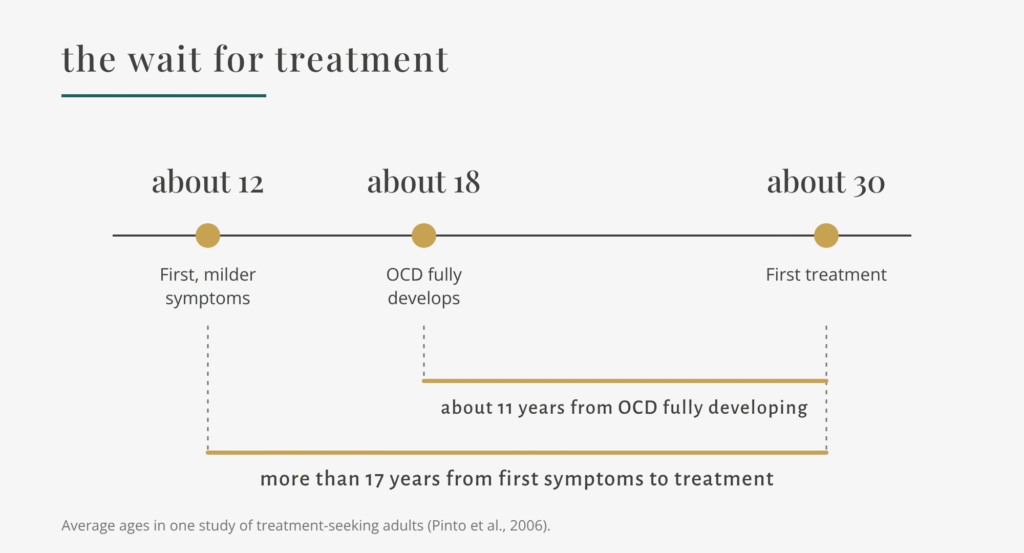
Average ages in one study of treatment-seeking adults.
How is OCD Treated?
The good news is that OCD is treatable, and many people experience meaningful improvement with evidence-based treatment.[6] The two main evidence-based treatments are:
Cognitive Behavioral Therapy (CBT), particularly Exposure and Response Prevention (ERP): ERP is considered the gold standard psychological treatment for OCD.[7] Together, we gradually face your fears (exposure) while you practice not engaging in your usual compulsions (response prevention). I’ll be honest, this can sound intimidating at first. That’s why we move at a pace you choose, and I explain every step. Over time, ERP helps break the cycle by showing you that:
- Anxiety decreases naturally, even without performing compulsions
- The feared consequences typically don’t happen
- You can tolerate uncertainty and discomfort far better than you thought
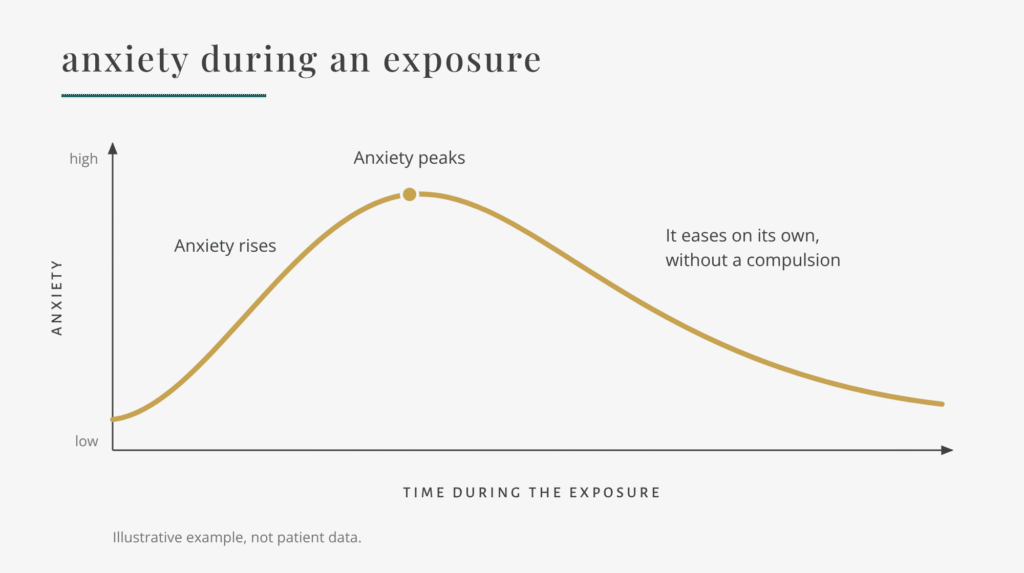
Anxiety rises during an exposure, peaks, and then eases, even without a compulsion
Medication: Certain medications, particularly selective serotonin reuptake inhibitors (SSRIs), have been found effective in reducing OCD symptoms.[10] For some clients, combining medication with CBT/ERP is the most helpful approach,[10][11] and I’m glad to collaborate with prescribers.
Acceptance and Commitment Therapy (ACT) can also be helpful, particularly alongside ERP. I like to weave in mindfulness practices to help clients build a new relationship with their intrusive thoughts.
Taking the First Step
If you recognize OCD symptoms in yourself or a loved one, the most important step is to connect with a professional who has experience treating OCD. It’s not something you have to “just deal with” or overcome through willpower alone.
With the right support and evidence-based treatment, people with OCD can experience significant symptom reduction and a better quality of life. The journey will be challenging at times. With practice, effort, and a strong relationship with your psychologist, you can come out stronger and more free than before.
If you’re struggling with OCD, reach out for a free consultation. Together, we’ll make a plan to help you break free from your symptoms and move toward a life aligned with your values and goals.
